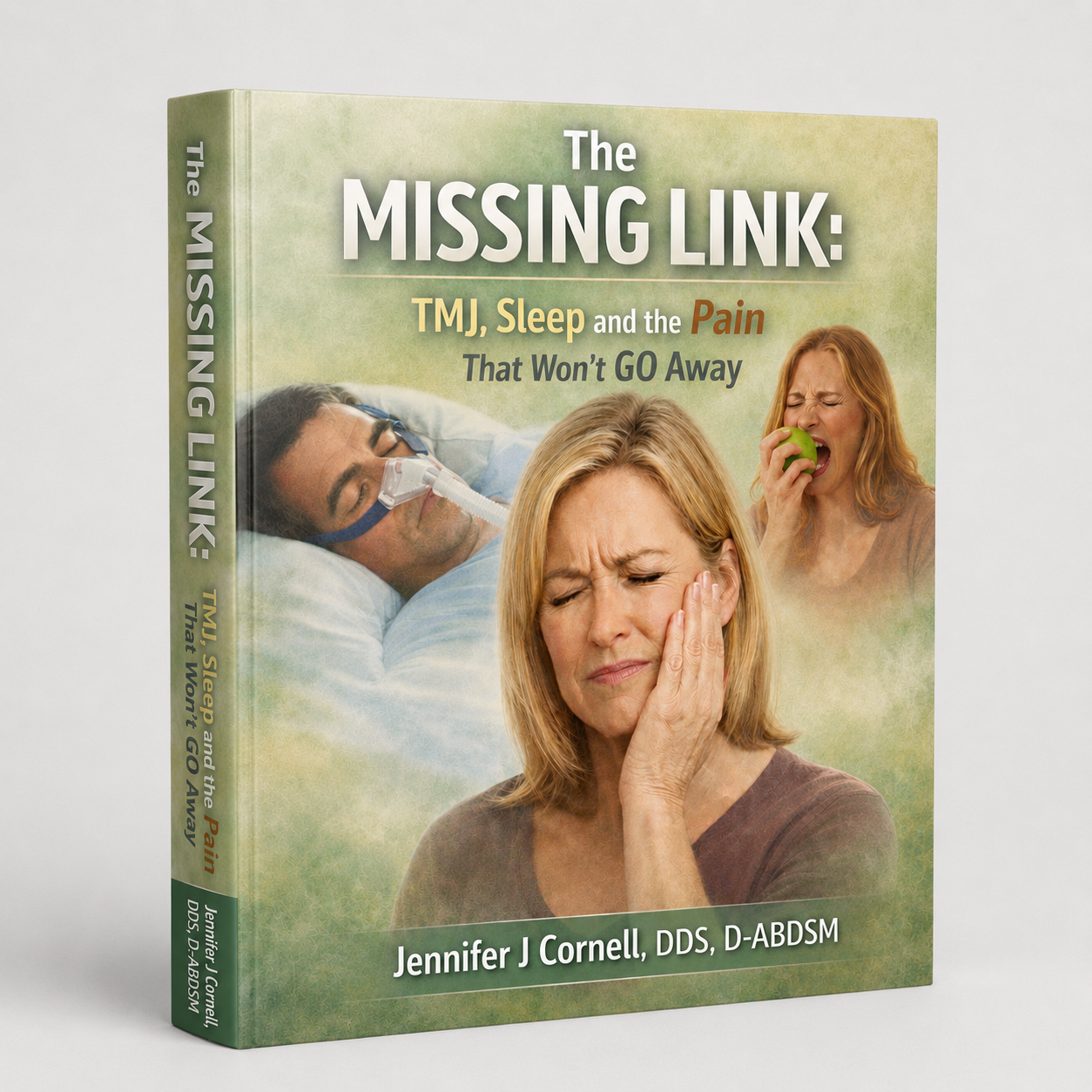
Discover why most TMJ and sleep treatments fail—and how a personalized approach can finally give you relief. Clarksville’s only dedicated TMJ and dental sleep practice.
Get Relief Now

.png)
.png)

.png)
Dr. Cornell and the team have over 70 five-star Google reviews from patients across Tennessee.
Leave Us A Review

At Everwell TMJ & Sleep, we help patients uncover the often-overlooked connection between jaw disorders, headaches, clenching, airway issues, and poor sleep.
Many of our patients have already seen multiple providers before finding us. They’ve been told their scans are normal, their ears “look fine,” or that their symptoms are “just stress.” But symptoms are signals. Our job is to listen carefully, understand the full picture, and provide thoughtful, conservative care designed to help you feel better — not rushed, dismissed, or overwhelmed.
of TMJ patients experience poor sleep quality.
more likely of developing sleep apnea if you already have a pre-existing TMJ disorder.
adults with TMJ report that a single night of bad sleep directly increases their jaw pain the following morning.
of people diagnosed with obstructive sleep apnea also suffer from chronic TMJ symptoms.

Everwell TMJ & Sleep, led by Dr. Jennifer Cornell, offers personalized sleep apnea treatment. We get to the cause of your symptoms.
Are you a provider who is looking to refer a patient for TMJ or Sleep Apnea issues? Click below to fill out our custom referral form for providers.
 Refer Someone Now

Dr. Cornell is renowned for her expertise in Dental Sleep Medicine, offering personalized care for TMJ and sleep disorders. Diplomate, American Board of Dental Sleep Medicine. One of fewer than 700 dentists in the U.S. to hold this distinction. See why patients across Tennessee trust Dr. Cornell for complex TMJ & Sleep Cases
More about Dr. Cornell.png)
At Everwell TMJ & Sleep, our team is dedicated to creating a welcoming, supportive experience from the moment you walk through our doors. We take the time to listen, answer your questions, and guide you through every step of your care, helping you feel informed, comfortable, and confident in your treatment journey.
We're always here to answer questions. Below is a list of the most common questions new patients have about TMJ and Sleep disorders.
Have you been told by a healthcare professional, whether it be a dentist or medical provider that you have “TMJ”? Actually we all have it, we actually have 2, a right and a left! “TMJ” stands for temporomandibular joint. When there is dysfunction in this joint system it is referred to as “TMD” or Temporomandibular Disorder/Dysfunction. There are a variety of disorders when it comes to this joint as well as a variety of causes. A dentist trained in this area of treatment can diagnose and treat these disorders.
The jaw joint or TMJ is unlike any other joint in your body. Not only does it hinge like your knee but it also translates down the bony eminence of your skull as you open wide. In between the skull bone and your lower jaw bone there is a cartilaginous disc that is held in place by ligaments and muscles. As you open this disc should stay in between the two bones but sometimes it can “click” out of place and back into place which is usually the noise one might hear or feel. Like other joints in the body it can also break down and experience degenerative disorders. These degenerative disorders can sound like crunch noises or sand like noises. It is important to seek a dentist with advanced training in the diagnosis and treatment of TMJ disorders to get the proper diagnosis.
Typically you should seek treatment when the disorder is painful, disrupting the function of it such as chewing or speaking and when it is interfering with the quality of your life. Dentists trained in the diagnosis and treatment of TMD call this "PDQ"-pain, dysfunction and quality of life. If you suspect your have a jaw joint disorder and are concerned it may get worse and cause “PDQ” then you should seek an evaluation by a dentist who has had additional training in TMJ disorders to make sure there are not other causes contributing to it. Other causes may be cervical spine issues, sleep apnea, certain medications that cause bruxism, or stress.
First, it is important to seek out a dentist who has had additional training and focus in the diagnosis and treatment of jaw joint disorders. In general, dental school does not prepare graduates well in this area. For those doctors who have completed additional training, most start with conservative treatment. It is important to determine the proper diagnosis and then treat based on the diagnosis. The use of splint therapy along with physical or massage therapy would be one form. The splint, or orthotic, allows the jaw joints to rest in a neutral position, providing biofeedback for muscle relaxation. Depending on the issue your doctor will see you every few weeks to adjust the orthotic as your joint heals. The use of physical therapy or massage therapy modalities allow for the release of tense muscles, strengthening of supporting muscles and additional biofeedback. Together the orthotic and therapy provide the best conservative approach to treatment of TMD. Surgery should be reserved as a last course of treatment.
The most common warning signs of sleep apnea include loud snoring, gasping or choking during sleep, waking up tired, morning headaches, dry mouth, daytime fatigue, brain fog, irritability, and difficulty concentrating. Many people with sleep apnea don’t realize they stop breathing throughout the night until a partner notices it.
Yes. While loud snoring is one of the most common symptoms of sleep apnea, not everyone with sleep apnea snores. Some people experience pauses in breathing, poor sleep quality, daytime fatigue, headaches, or waking up gasping for air without noticeable snoring.
Untreated sleep apnea can have serious long-term effects on your health. Repeated pauses in breathing lower oxygen levels and place stress on the body throughout the night. The good news is that sleep apnea is highly treatable. Many patients experience better sleep, improved energy, reduced snoring, and better overall health after starting treatment.
We have already helped so many others just like you!
Discover why most TMJ and sleep treatments fail—and how a personalized approach can finally give you relief.
Call to Schedule a Consultation
.svg)
.png)


.png)


.png)