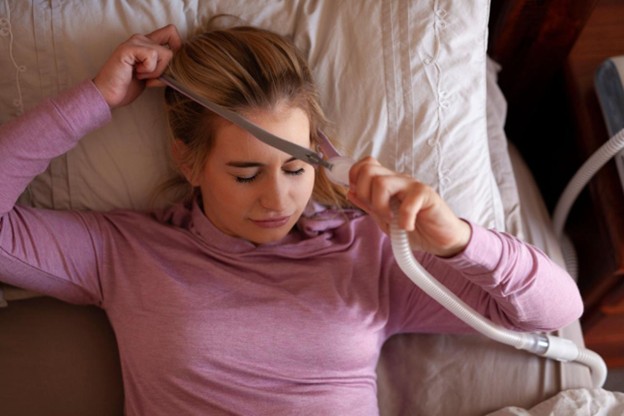
Many Sleep Apnea patients have multipe symptoms and experience:
Because breathing, muscle tone, the nervous system, and the jaw are closely connected, sleep-disordered breathing often overlaps with TMJ symptoms, clenching, headaches, and chronic facial tension. At Everwell TMJ & Sleep, we help patients understand these connections and explore conservative, evidence-based treatment options designed around the individual patient — not a one-size-fits-all approach.

Obstructive Sleep Apnea occurs when the airway repeatedly narrows or collapses during sleep, reducing oxygen levels and disrupting normal sleep architecture. Even brief interruptions in breathing can activate the nervous system and place stress on the body throughout the night. This includes symptoms such as loud snoring waking unrefreshed & daytime fatigue, morning headaches, dry mouth, nighttime grinding or clenching, irritability, and frequent waking during sleep.

For many patients, the jaw symptoms are not isolated problems — they are part of a larger sleep and airway picture. When breathing becomes restricted during sleep, the nervous system may activate the jaw muscles in an effort to help stabilize or reopen the airway.
There is no single “best” sleep apnea treatment for every patient. The appropriate treatment depends on many custom factors suchas severity, anatomy, the person's airway structure, sleep study findings, body weight & overall health, patient comfort & tolerance as well as lifestyle factors.

A highly effective treatment for sleep apnea, helping patients breathe properly throughout the night for deeper, more restful sleep. By reducing interruptions in breathing, CPAP therapy can improve energy levels, reduce snoring, and support better overall health and heart function.
A sleep apnea treatment designed to keep patients from sleeping in positions that restrict airflow, especially on the back. By encouraging healthier sleep posture, positional therapy can reduce snoring, improve breathing, and support more restful, uninterrupted sleep.
This help identify structural issues that may contribute to sleep apnea, snoring, and breathing difficulties. By assessing the airway, nose, throat, and surrounding tissues, specialists can recommend targeted treatments to improve airflow, sleep quality, and overall health.
A comfortable, non-invasive treatment for sleep apnea and snoring that works by gently repositioning the jaw to keep the airway open during sleep. Custom-fit oral appliances can improve sleep quality, reduce daytime fatigue, and provide an effective alternative to CPAP therapy for many patients.
This plays an important role in reducing the symptoms of sleep apnea by decreasing excess pressure on the airway during sleep. Maintaining a healthy weight can improve breathing, reduce snoring, and support better sleep quality and overall health.
For sleep apnea this uses two or more treatments, such as oral appliance therapy, CPAP, positional therapy, or weight management, to maximize airway support during sleep. This personalized approach helps improve breathing, enhance sleep quality, and deliver more effective long-term results for patients with complex or severe cases.
If you wake up exhausted, clench your jaw at night, struggle with CPAP, or suspect your sleep may be contributing to headaches or TMJ symptoms, we are here to help. At Everwell TMJ & Sleep, we take time to look at the full picture, because breathing, sleep, and jaw health are deeply connected.
We have already helped so many others just like you!
Discover why most TMJ and sleep treatments fail—and how a personalized approach can finally give you relief.
Call to Schedule a Consultation
.svg)
.png)
.png)


.png)
.png)


.png)